Could Diet Affect Our Behaviour and the Way we Treat Others?
Veganism, at its core, is an ethical stance that recognises non-human animals as sentient beings with the right not to be used by humans, as commodities or resources—for food, clothing, personal care, household goods, or entertainment.
Let us focus here on one of its most immediate and transformative aspects: our diet. We all hear the old adage – ‘What we eat is what we become.’
This raises an important question:
Could aligning our diets more closely with natural, plant-based and Vegan patterns benefit not only our physical health, but also our behaviour, our systems, and ultimately how we treat our planet and all its inhabitants—human and non-human alike?
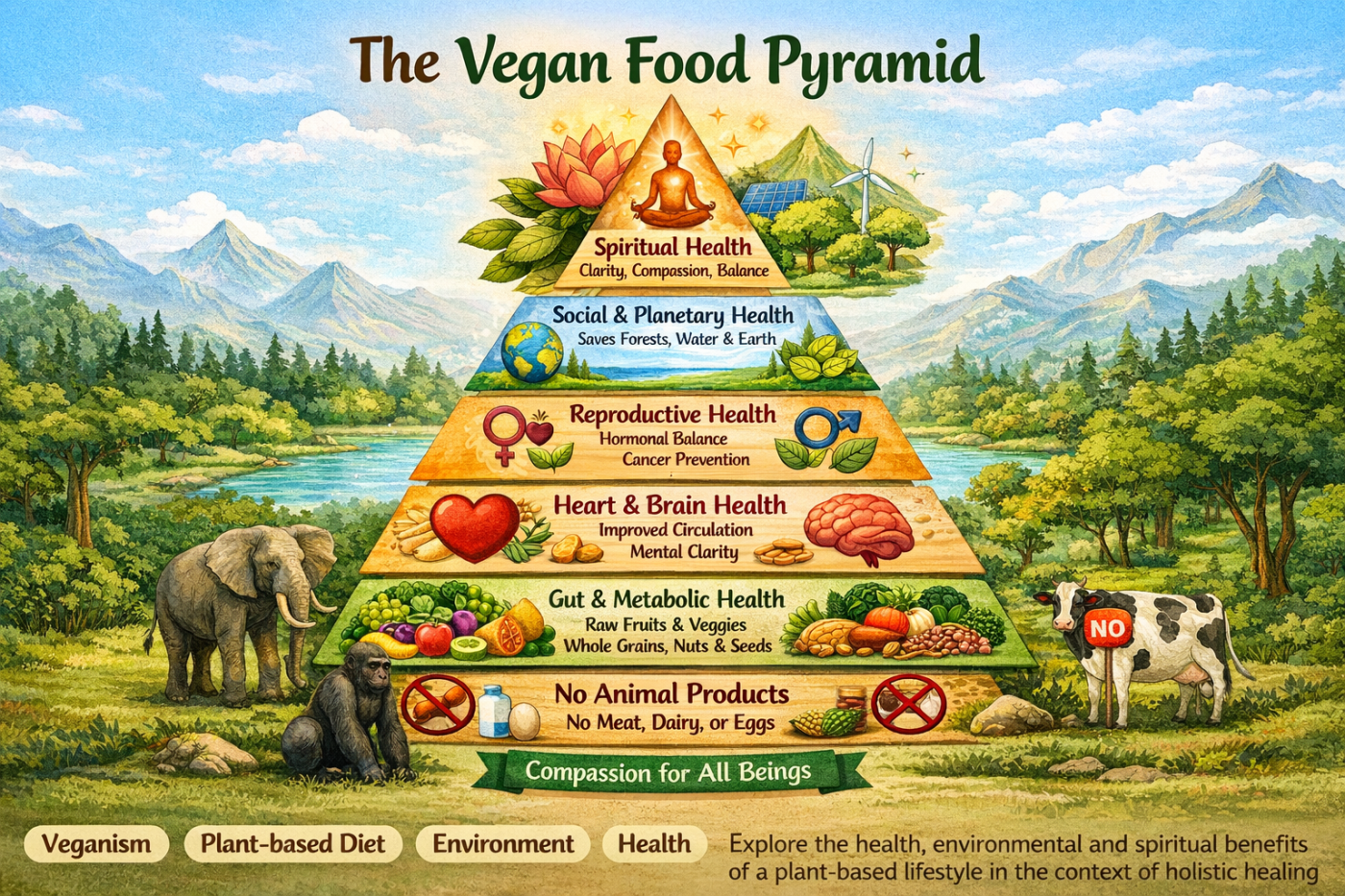
What Our Human Body Truly Needs
From a biological perspective, humans do not require any animal products in their diet.
Our physiology tells a clear story. As primates—great apes—we share key anatomical and digestive traits with species such as gorillas, bonobos, chimpanzees, and orangutans. These include:
- Long digestive tracts suited for fibre-rich foods
- Flat molars designed for grinding plant matter
- A natural inclination toward fruits, leaves, and vegetation
Our closest relatives thrive primarily on fruit and green plant foods. This strongly suggests that our own optimal diet is rooted in the same natural sources.
Hormonal Balance & Emotional Wellbeing
Consumption of animal products introduces bioactive hormones from other species into the human body. These can interfere with our own hormonal balance and may influence:
- Mood and emotional stability
- Behavioural responses
- Stress and reactivity
Highly processed and animal-based foods can elevate stress hormones such as cortisol and adrenaline, while also impacting insulin and other metabolic processes.
In contrast, a whole-food, plant-based diet—especially one rich in raw fruits and vegetables—supports:
- Balanced serotonin levels (mood regulation)
- Stable hormonal cycles (including oestrogen and progesterone)
- A calmer, more centred emotional state
Plant compounds such as phytoestrogens (found in foods like soy) are often supportive rather than disruptive, unlike animal-derived hormones found in dairy and meat.
Circulation, Heart & Brain Health
Animal products contain cholesterol, whereas plant foods contain zero dietary cholesterol.
High intake of animal-based foods is linked to:
- Blocked arteries
- Reduced blood flow
- Increased risk of heart disease
Poor circulation affects not only the heart, but every organ—including the brain.
In contrast, plant-based diets rich in fresh, water-dense fruits and vegetables:
- Improve blood flow and hydration
- Support cleaner, more efficient circulation
- Enhance nutrient delivery throughout the body
Many people experience increased mental clarity and cognitive function when shifting from heavy, processed animal foods to lighter, plant-based nutrition.
Blood Sugar & Metabolic Balance
Animal products and processed foods can contribute to insulin resistance and unstable blood sugar levels, increasing the risk of type 2 diabetes.
Whole plant foods, particularly fruits and vegetables:
- Provide natural sugars balanced with fibre
- Support stable blood glucose levels
- Reduce stress on the pancreas
This allows the body to function more efficiently without constant metabolic strain.
Digestive & Gut Health
The popular “protein myth” often leads to overconsumption of dense, protein-heavy foods—whether animal-based or highly processed plant substitutes.
In reality:
- Excess protein can lead to digestive strain, bloating, and toxin buildup
- Animal products contain no fibre and can contribute to putrefaction in the gut
By contrast, fibre-rich plant foods:
- Cleanse the digestive tract
- Support healthy gut bacteria (microbiome)
- Promote regular, efficient elimination
A healthy gut reduces inflammation, improves nutrient absorption, and lowers the risk of diseases, including bowel cancer.
It is worth noting that some of the strongest animals on Earth—elephants, rhinoceroses, gorillas—thrive on simple plant-based diets. Strength does not require animal protein, or even excessive Seitan or tofu.
Reproductive Health
Plant-based diets are associated with reduced risks of:
- Breast cancer
- Prostate cancer
- Uterine-related conditions
Many individuals report improved reproductive health, including:
- Reduced menstrual pain
- Better energy levels
- More balanced cycles
While modern lifestyles involve many variables, diet plays a key role in supporting the body’s natural reproductive balance.
Social & Planetary Impact
Our food choices extend far beyond personal health.
Animal agriculture is one of the leading drivers of:
- Deforestation
- Water depletion
- Greenhouse gas emissions
Research from the University of Oxford shows that shifting to plant-based diets could reduce food-related emissions by up to 70%, while using significantly less land, water, and energy.
A plant-based system allows us to:
- Feed more people using fewer resources
- Reduce environmental destruction
- Redirect resources into building healthier communities
It creates a world that is not only sustainable—but truly compassionate.
Spiritual & Energetic Alignment
From a spiritual perspective, a plant-based, whole-food diet—often described as Sattvic—supports clarity, balance, and higher awareness. Please note we do not count dairy or honey, as Sattvic in our philosophy as it is also a product of exploitation.
A Vegan plant based fruit-rich diet is believed to:
- Cleanse and balance energy centres (chakras)
- Enhance intuition and inner awareness
- Promote lightness, calmness, and emotional stability
In contrast, animal products are often associated with heaviness, inertia, and energetic disturbance.
As we align more closely with nature, we begin to shift not only physically, but mentally and spiritually—towards compassion, awareness, and unity with all life.
A Return to Balance
In summary, a diet centred on whole plant foods—especially fruits, vegetables, and minimally processed options—can:
- Support metabolic and hormonal balance
- Improve circulation and organ function
- Reduce the risk of major diseases
- Enhance mental clarity and emotional wellbeing
But perhaps most importantly, going vegan transforms how we see the world.
It shifts our relationship with:
- Animals—from exploitation to respect
- Nature—from consumption to coexistence
- Ourselves—from disconnection to awareness
The Least We Can Do
We do not need animal products to survive or thrive.
Choosing a plant-based and Vegan lifestyle is one of the most powerful actions we can take—for our health, for the Earth, and for all beings we share this planet with.
It is, quite simply, the least we can do. It may not be perfect or the ultimate way to never harm anyone, but it is a moral baseline we need to sign up for, with some urgency as human beings.
Kindly Take the Next Step
Please click now to take the Vegan Pledge with us, encourage others to do the same, and subscribe to this blog for more free articles, tips and insights on healing ourselves and our planet.
 Earth Healing Network
very good article.🙌👏👏
LikeLike
Thank you for your kind comment.
LikeLike