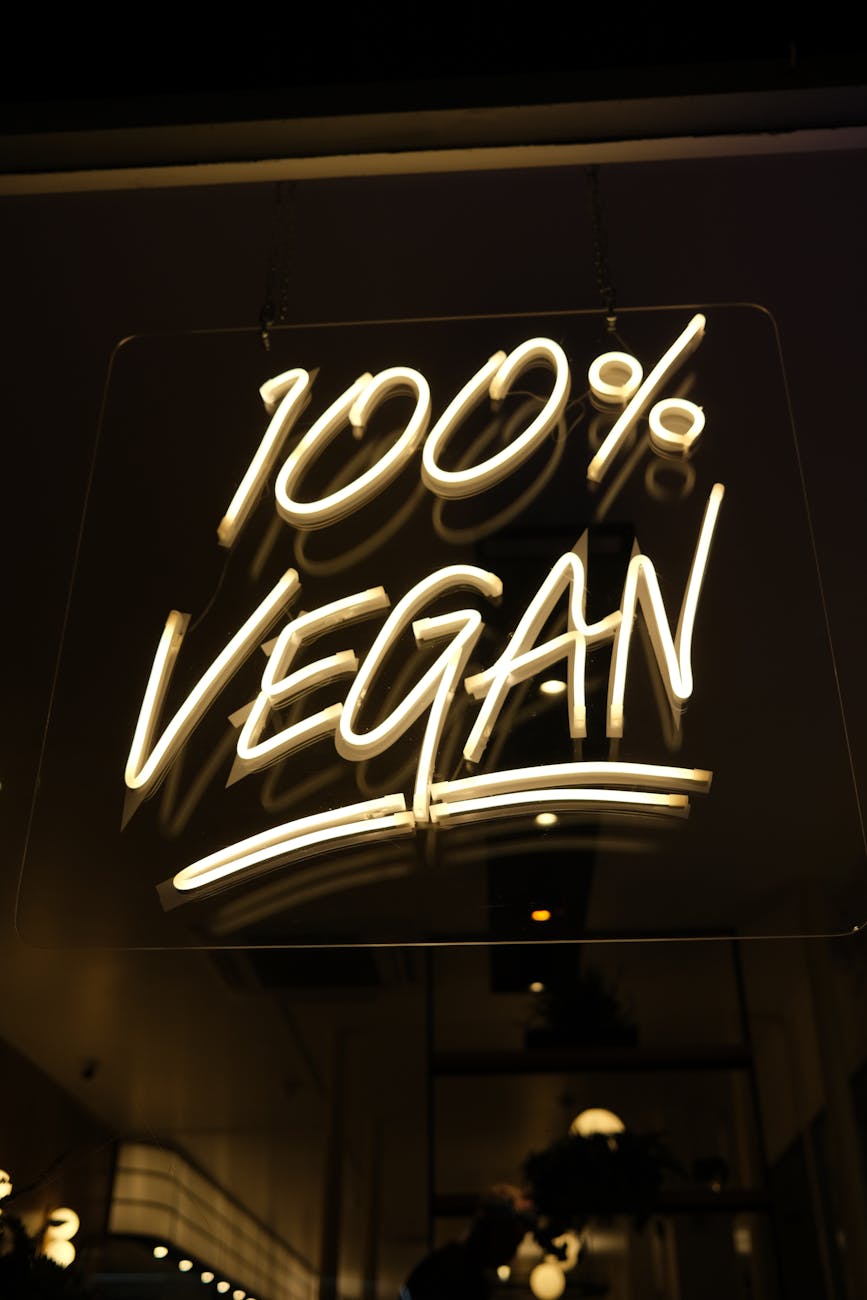
Sad to see Veganuary go past? Vegan pizzas, burgers and ready meals will thin out in most supermarkets now. Because as we enter February, something familiar happens again. The once-full supermarket aisles stocked for Veganuary begin to empty. The banners disappear, the marketing quietens, and with it returns an uncomfortable truth: Veganism is still not widely recognised as a lifelong ethical commitment. Instead, it is repeatedly reduced to a temporary diet, a January challenge, or a food trend that people “try out” for a few weeks before returning to business as usual.
Year after year, Veganism is promoted in the same way as gluten-free or low-carb eating, framed as a health experiment or an environmental lifestyle tweak (confusion between Plant Based and Vegan). Advertising and social media campaigns focus almost entirely on vegan “meat” and “dairy” substitutes, reinforcing the idea that veganism is NOT simply about replacing animal products on a plate. What is consistently missing is a clear explanation of what Veganism actually is: An animal rights–based moral decision that extends to all areas of life, not just food.
The truth is that Veganism is not a trend, a phase, or a challenge with an end date. It is the recognition that all sentient beings have the right to live free from exploitation, ownership, and harm. Here are 10 vital changes to go Vegan beyond Veganuary:
1) Recognise rights of all sentient living beings and refuse to view them as properties, slaves, objects or owned animals.
At its core,Vveganism rejects the idea that non-human animals exist for human useage, whether that use takes the form of food, clothing, entertainment, experimentation, or companionship. It is a refusal to see animals as property, commodities, or resources.
2) Understand that humans are one type of animal and human rights are a subset of animal rights overall, and not above animal rights
Understanding Veganism also requires a shift in how we view ourselves. Humans are not separate from the animal kingdom; we are one type of animal among many. Human rights do not sit above animal rights but exist within them. The right not to be harmed, exploited, or treated as an object is not a uniquely human entitlement. When this understanding is in place, Veganism stops being about personal preference and becomes about justice and Animal Equality of Human and Non Human Animal Rights as One.
3) Boycott all animal products in food, clothing, personal or household items, and all things you buy
Living vegan means boycotting all animal products, not only in food but in everything we buy and use. This includes clothing, shoes, personal care items, household products, and any goods derived from animal exploitation. Substitute these with Vegan alternatives whether plant based for environment or synthetic just for animal rights, as they are far better than animal body parts.
4) Say no to all animal testing or animal tested items too
Going Vegan also means rejecting animal testing and refusing to support products or industries that rely on it. Testing on non human animal subject is evil and a form of slavery and subjugation. Instead we can use consenting human subjects, or use human DNA based animal cell cultured tissues for research.
5) Refuse all activities and services that use or exploit animals such as hunting, fishing, zoos, aquariums,
Veganism extends further still, to the activities and services we choose to participate in. Hunting, fishing, zoos, aquariums, and other forms of animal entertainment are incompatible with a belief in animal rights, no matter how they are marketed, even as conservation, or population number adjustments, or preserving indigenous species. It is not Vegan to hunt or fish or support zoos or aquariums.
6) Choose not to have pets except for rescuing animals you can provide for and give them only Vegan pet food
The same ethical lens applies to our relationships with non-human animals as it does with human animals. Veganism does not support the breeding, buying, or owning of animals for human pleasure. However, it does recognise responsibility toward animals who already exist and are in need of care. Rescuing animals and providing them with safe, loving homes is aligned with vegan values, as is choosing Vegan pet food wherever possible to avoid perpetuating further harm.
7) Promote and support Vegan people, businesses, and charities
Veganism is also an active commitment, not a passive label. Supporting vegan people, businesses, and charities strengthens a system built on respect rather than exploitation. We need ‘Vegan’ to become a norm, not a marginalised community. We need to spread Vegan voices around, and promote people who are morally Vegan and ethically committed to spreading the awareness, and empower them with all resources necessary to make their influence wider. Together we are a real movement, not a broken one.
8) Educate and create awareness on Veganism and actively create a better planet for all beings
Education and awareness are essential, because silence allows harmful narratives to persist. Sharing articles, books, videos, and talks on Veganism, and distributing leaflets and brochures helps people learn and absorb knowledge which is quite new to many of them. You can share our leaflet here: Free Vegan Leaflet
9) Take the Vegan Pledge which recognises Veganism as an Animal Rights decision
Taking a vegan pledge that explicitly recognises veganism as an animal rights decision helps anchor this commitment beyond trends and challenges. Even if you have been Vegan for some time, you can always Take this Pledge as a symbol of your continuing support to the movement. Take the Vegan Pledge
10) Sign and Share the Declaration of Animal Rights to acknowledge Animal Equality – of human and non human animal rights.
Signing and sharing declarations of animal rights affirms the principle of equality between human and non-human animals and reinforces that this is a matter of justice, not lifestyle branding. It is no longer about whether we must first focus on Human Rights and then on Animal Rights, but about integrating both Human and Non-Human Animal Rights as the Universal Rights of All Sentient Living Beings as one. ANIMAL RIGHTS DECLARATION
Veganuary may introduce people to plant-based eating, but it should never be the end point. February is where the real question begins: will Veganism be treated as a temporary experiment, or as what it truly is—a moral stance that calls for consistency, courage, and lifelong responsibility? A better planet for all beings is not created in one month of the year. It is created when we choose, every day, to live in alignment with the rights of all sentient life.
 Earth Healing Network
Leave a comment